
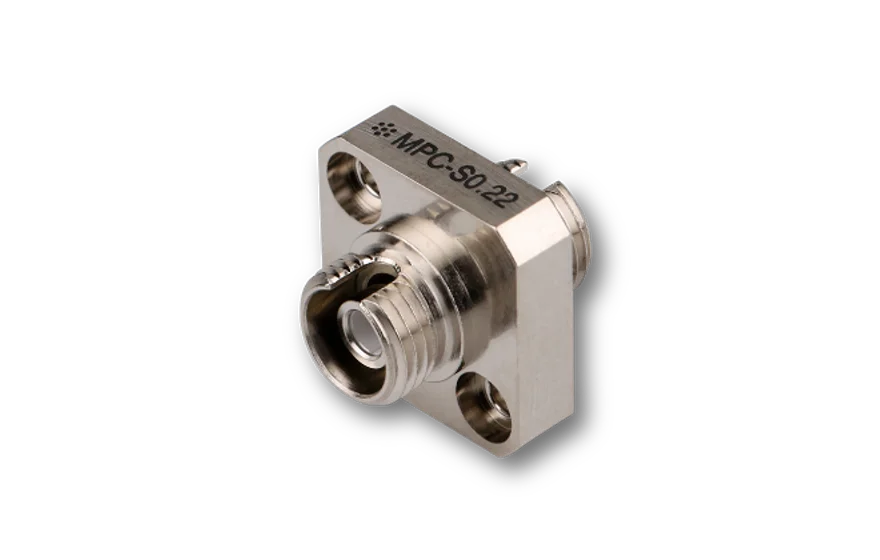
Mating Sleeves

For connecting two single-mode fiber cables

60C-FC/FC
60C-FC/FC

Features

Mating sleeves provide an uninterrupted physical contact between two single-mode fiber cables SMC with core-centering.
Two connectors of type FC PC (0°-polish) or of type FC APC (8°-polish) can be connected.
There are hybrid mating sleeves for connecting two fiber cales with differing types of connectors.

Please note: These are not suitable for standard single-mode fiber cables and polarization-maintaining fiber cables for wavelengths < 1000 nm, due to unpredicable power loss and a diminished PER. We recommend to use fiber-to-fiber couplers with integrated opics.

In any case: The mating sleeves are not suitable for any fiber cables with end caps including PCF fiber cables.

Order options

   FC PCFC APCE2000 PCE2000 APCF-SMA
FC PC 60C-FC/FC-60C-FC/E2000--
FC APC -60C-FC/FC-60C-FC/E2000-
E2000 PC 60C-FC/E2000-60C-E2000/E200--
E2000 APC-60C-FC/E2000-60C-E2000/E200-
SMA-905 (F-SMA)----60C-FSMA/FSMA

FAQ

  • Mating Sleeves
    • Why are mating sleeves not suitable for PM fibers and single-mode fibers < 1000nm?

      Mating sleeves are not suitable for standard single-mode fiber cables and polarization-maintaining fiber cables for wavelengths ≤1000 nm. It may lead to unpredictable power loss and a diminished PER. 

      Reason is, that the connectors were originally designed for telecom applications with MFDs around 10 µm. For shorter wavelengths with smaller MFDs the tolerancing is simply not precise enough to get a good enough overlap. 

      As for the PER, the alignment angle of the polarization axis also has a certain tolerance margin. Within the margin you will already see significant losses in PER when using a simple mating sleeve.


      We recommend to use fiber-to-fiber couplers with integrated optics instead.


      In any case: The mating sleeves are not suitable for any fiber cables with end caps including PCF fiber cables.


    • What can I use instead of a mating sleeve?
      We recommend to use fiber-to-fiber couplers with integrated optics instead.